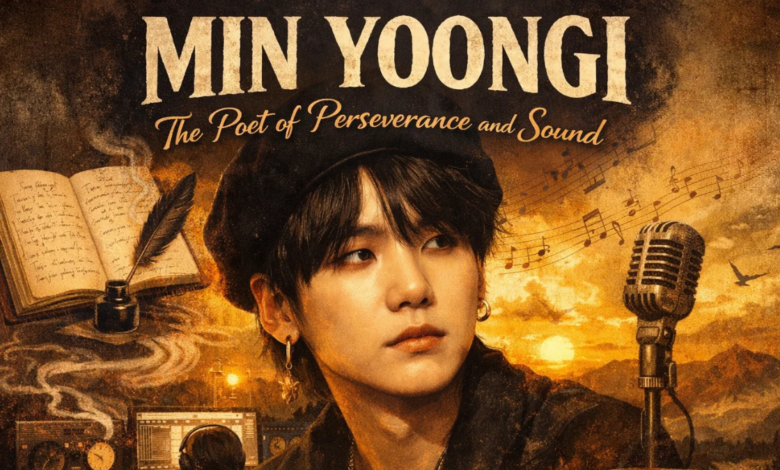
Min Yoongi. In the constellation of global pop, few stars burn with the intricate, compelling intensity of Min Yoongi. Known to the world as SUGA of BTS and his fiercer alter-ego Agust D, Yoongi is not merely a performer; he is a composer of emotions, an architect of soundscapes, and a quiet revolutionary who has reshaped the boundaries of modern music and celebrity. His journey from a small studio in Daegu to the summit of the global charts is a testament to raw talent meeting relentless work ethic. But beyond the platinum records and sold-out stadiums lies a deeper narrative: one of profound introspection, vulnerability, and a steadfast commitment to giving voice to silent struggles. This article delves into the multifaceted universe of Min Yoongi, exploring the artist, the producer, and the advocate who has turned personal pain into universal anthems of hope and resilience.


The Daegu Dreamer: Early Life and Musical Awakening
Growing up in Daegu, South Korea, a young Min Yoongi found his escape and expression in music. He was drawn to the emotive power of rhythm and lyricism from an early age, teaching himself piano and later delving into hip-hop. The genre’s raw honesty and narrative depth resonated with his own introspective nature. He began writing and producing tracks on a basic computer, laying the foundational skills that would later become his superpower, often sacrificing immediate comfort for the long-term dream of a career in sound.
This period of apprenticeship was defined by quiet determination. Before the glittering stage lights, Yoongi took on various jobs to fund his passion, even working part-time at a recording studio where he could absorb technical knowledge. These humble beginnings instilled in him a gritty realism and a profound understanding of the craft from the ground up. It was this self-made, relentless drive that eventually led him to audition for Big Hit Entertainment, not initially as a rapper, but as a producer—a key detail that underscores his primary identity as a creator behind the boards.
The Birth of SUGA: Pillar of BTS’s Sonic Identity
As SUGA, Min Yoongi became one of the three formidable rappers anchoring BTS’s lineup, bringing a distinct, sharp, and often melancholic tone to the group’s early discography. His verses were frequently autobiographical, weaving tales of societal pressure, personal anxiety, and youthful ambition into the group’s larger narrative. Tracks like “No More Dream” and “Tomorrow” served as early canvases for his introspective lyricism, establishing a level of emotional authenticity that would become a BTS hallmark and deeply connecting with a generation facing similar pressures.
His role, however, rapidly expanded beyond performing. Min Yoongi emerged as a central figure in BTS’s in-house production team, co-composing and producing many of their most impactful songs. From the haunting melody of “First Love” dedicated to his piano, to the anthemic production of “Dope” and “Fire,” his musical fingerprints are embedded deep within the group’s evolution. This dual role as both a frontline performer and a background architect has been crucial in crafting BTS’s cohesive and innovative sound, proving him to be a versatile and indispensable creative force.
Agust D: The Unfiltered Alter Ego and Solo Exploration
In 2016, Min Yoongi unleashed his mixtape Agust D, a project that ripped open a new, raw dimension of his artistry. Under this alter ego, he adopted a faster, more aggressive rap flow and tackled subjects too personal for the BTS umbrella: his struggles with depression, social anxiety, family expectations, and the dark side of fame. Tracks like “The Last” and “Agust D” were blisteringly honest confessions, serving as a therapeutic outlet for him and a startling revelation for fans used to the more polished idol image. This project redefined the possibilities of solo work within the K-pop ecosystem.
The sequel, *D-2*, released in 2020, showcased a matured but no less potent Agust D. It reflected on success, the emptiness it can sometimes bring, and ongoing mental health battles, as heard in the global hit “Daechwita.” The alter ego allowed Min Yoongi to explore gritty, sample-heavy, traditional hip-hop production, differentiating his solo sound from BTS’s. Through Agust D, he demonstrated that true artistry involves confronting one’s shadows, transforming personal catharsis into powerful, universal art that challenges stigma and inspires open conversation.
The Producer’s Desk: Shaping Sounds Beyond BTS
Min Yoongi’s influence as a producer and songwriter extends far beyond BTS’s own albums. Under his real name, he has built an impressive portfolio of credits for other artists, showcasing his melodic sensibility and genre versatility. His work with singers like IU on the chart-topping “Eight,” Heize on “We Don’t Talk Together,” and Suran on the award-winning “Wine” highlights his ability to craft sophisticated, emotive soundscapes that elevate an artist’s vision. Each collaboration is a lesson in subtlety, proving his skill lies in serving the song’s emotional core.
This external work is not merely collaborative; it’s a form of artistic dialogue and mentorship. By sharing his expertise, Min Yoongi contributes to the broader Korean music industry’s creative growth. His production style often blends warm, lyrical piano lines with crisp hip-hop beats—a signature sound now recognized and sought after. His establishment of the producer team “BANGTANTV” and his active role in mentoring younger artists at Big Hit further cement his legacy as a musician’s musician, respected for his technical mastery and insightful guidance.
Lyricism as Lifeline: Themes of Mental Health and Societal Commentary
A defining pillar of Min Yoongi’s artistry is his unwavering commitment to lyrical honesty, particularly around mental health. He has consistently used his platform to articulate the complexities of psychological struggle, making him a pivotal figure in destigmatizing these conversations, especially in cultural contexts where they were once taboo. Songs like “The Last” (as Agust D), “Shadow,” and “So Far Away” offer not just descriptions of pain, but narratives of endurance, providing listeners with a sense of solidarity and the vocabulary to understand their own experiences.
His societal commentary is equally potent. From critiquing the relentless pressures of the education system in “No More Dream” to examining the crushing weight of societal expectations and economic disparity in “BTS Cypher” series and “Baepsae,” his lyrics serve as critical social documents. He articulates the anxieties of his generation with precision, transforming frustration into art. This willingness to engage with difficult topics has forged a deep, trust-based bond with a global audience who see their own struggles reflected and validated in his words.
The Pianist’s Touch: Musicality and Evolving Artistry
While renowned for his rap, Min Yoongi’s musical foundation is deeply rooted in the piano. This classical influence permeates his compositions, bringing a layer of poignant melody and emotional depth to both BTS’s tracks and his solo work. His solo song “First Love,” an ode to his childhood piano, is a masterclass in blending instrumental storytelling with lyrical narrative. This pianistic sensibility allows him to construct songs that are structurally complex yet emotionally immediate, bridging genres seamlessly.
His artistry is in constant evolution, refusing to be pigeonholed. From hardcore hip-hop to pop, R&B, and even orchestral elements, Min Yoongi demonstrates a restless creative spirit. His recent works, including his official solo album D-DAY under the name Agust D, show an artist synthesizing all his experiences—the aggression, the melancholy, the success, the contemplation—into a more refined, expansive sound. He treats each project as a new chapter in an ongoing musical diary, ensuring his work remains dynamic, unpredictable, and profoundly personal.
Philanthropy and Advocacy: The Quiet Force for Good
Parallel to his artistic output, Min Yoongi has established a powerful legacy of quiet philanthropy. His donations are often large-scale, strategic, and revealed only through beneficiary reports, never seeking public fanfare. He has made significant contributions to organizations supporting pediatric cancer patients, low-income families, and disaster relief efforts, particularly in his hometown of Daegu. This pattern of giving reflects a deep-seated desire to create tangible, positive change, especially for the vulnerable, aligning with his lyrics about hope and support.
His most impactful advocacy, however, is arguably in the realm of mental health. By openly discussing his own therapy, his struggles with OCD and depression, and the importance of self-acceptance, he has normalized these conversations for millions. In a memorable 2020 video, he stated,
“It’s okay to have depression, it’s okay to have anxiety… It’s okay to not be okay. The important thing is to not blame yourself for it.”
This message, repeated through his music and words, has provided genuine solace and encouraged countless individuals to seek help, turning his personal journey into a lifeline for others.
Global Impact and Cultural Influence
The global resonance of Min Yoongi transcends typical measures of musical success. He represents a new archetype of the 21st-century artist: one who is intellectually engaged, emotionally transparent, and culturally impactful. His work, particularly as Agust D, has been studied in academic circles for its sociological and psychological themes, while his production techniques are dissected in music workshops worldwide. He has helped redefine the perception of Korean artists in the global industry, not as manufactured pop stars, but as serious, autonomous auteurs.
This influence is evident in the way he engages with Western artists as a peer, collaborating with the likes of MAX, Juice WRLD, and Halsey. He approaches these collaborations with a clear artistic vision, ensuring a fusion of styles that respects both parties’ identities. Furthermore, his journey—from a small-town dreamer to a keynote speaker at the government-led “Youth Day” event—embodies a powerful narrative of achieving dreams through perseverance, making him a symbolic figure for young creatives globally who see in him a reflection of their own ambitions and struggles.
Behind the Scenes: The Work Ethic and Creative Philosophy
The engine behind Min Yoongi’s prolific output is a legendary, almost stoic, work ethic. Famously known for his “no sleep” periods during production, he embodies a relentless pursuit of perfection. This drive, however, is not merely about ambition; it stems from a profound love for the craft of music-making itself. He often describes the studio as his sanctuary, a place where he finds peace and purpose. This intrinsic motivation fuels long hours of composing, arranging, and tweaking sounds until they perfectly convey the intended emotion.
His creative philosophy centers on authenticity and emotional truth. He believes music must stem from genuine feeling to connect. This is why his songwriting process is deeply personal, often starting with a simple melody on the piano or a raw emotional concept. He views technology and trends as tools to serve the song’s heart, not the other way around. This principled approach ensures that his vast body of work, despite spanning genres and moods, maintains a cohesive thread of sincerity that listeners instinctively trust and embrace.
The Evolution of Performance: From Shyness to Commanding Presence
Early in BTS’s career, Min Yoongi was notably reserved on stage, often channeling his intensity into his rap delivery rather than broad theatrics. He was the focused, sometimes stoic anchor, letting his words and music carry the weight. This initial shyness was part of his authentic charm, showing a artist who was still navigating the intense glare of the spotlight, more comfortable expressing himself through his art than through staged personas.
Over the years, a remarkable transformation has unfolded. While still retaining his characteristic coolness, he has grown into a powerfully magnetic and nuanced performer. His solo stages, particularly for Agust D tracks, are electrifying exhibitions of controlled chaos and charismatic command. He moves with a dancer’s precision when needed and holds the audience in rapt silence with a single glance. This evolution reflects his growing confidence and ownership of his artistry, proving that stage presence is not about being the loudest, but about embodying one’s truth with unwavering conviction.
The Business Mind: Entrepreneurship and Industry Influence
Beyond artistry, Min Yoongi possesses a sharp, pragmatic understanding of the music business. His early insights into publishing rights and royalties, famously advising his fellow members to secure their own, reveal an artist keenly aware of the industry’s structural realities. This acumen extends to his strategic approach to releases, building his solo projects with distinct branding (Agust D) while contributing to the group’s commercial empire, demonstrating a dual-track career strategy that maximizes creative freedom and impact.
His influence is also shaping the industry’s future. As a producer and mentor, he actively participates in nurturing the next generation of talent at HYBE. His very career path—from trainee to top producer and executive—provides a new blueprint for success within the K-pop system, one that values creative autonomy and ownership. By leveraging his position to advocate for artist rights and creative control, Min Yoongi is quietly helping to shift industry paradigms, ensuring that the ecosystem evolves to better respect and reward the creators at its heart.
Legacy and Future Directions
At this juncture, the legacy of Min Yoongi is already firmly established as that of a transformative figure in music. He has blurred the lines between idol and artist, between pop and profound introspection, and between Eastern and Western musical traditions. His greatest contribution may be proving that commercial success and uncompromising artistic integrity are not mutually exclusive, but can be synergistically achieved. He leaves a blueprint for authenticity in an often-scripted industry.
Looking forward, the trajectory of Min Yoongi seems oriented toward deepening his work as a pure creator and advocate. With his military service completed, the focus will likely remain on production, both for BTS’s future projects and his own solo endeavors, potentially exploring new genres and mediums. One can anticipate more philanthropic initiatives, particularly in mental health and youth support. His future is not just about more music, but about using the platform he has built to continue crafting spaces for healing, reflection, and raw, human connection through the power of sound.
Table: The Dual Dimensions of Min Yoongi’s Artistry
| Aspect | As SUGA of BTS | As Agust D / Solo Artist |
|---|---|---|
| Primary Role | Rapper, Songwriter, Producer | Primary Artist, Producer, Director |
| Musical Style | Integrated Pop, Hip-Hop, R&B | Raw Hip-Hop, Trap, Experimental |
| Lyrical Focus | Group narrative, youth, hope, love | Personal mental health, societal critique, ambition |
| Performance Vibe | Synced, powerful, part of a whole | Intense, charismatic, individually commanding |
| Production Role | Collaborative within team vision | Full autonomous control |
| Public Persona | The calm, witty, insightful “grandpa” | The fierce, unfiltered truth-teller |
Conclusion
The story of Min Yoongi is a modern parable of artistry forged in resilience. From the cramped studios of Daegu to the pinnacle of world stages, he has navigated his path with a rare combination of fierce talent and gentle humanity. He is a composer of anthems for the weary, a producer of sounds that touch the soul, and an advocate who uses his voice to amplify the whispers of those struggling in silence. More than a musician, he is a cultural architect who has built bridges of understanding across languages and borders through the universal dialect of emotion. As both SUGA and Agust D, Min Yoongi continues to remind us that our scars can be sources of strength, our vulnerabilities can be our power, and that the most enduring music is that which speaks, unflinchingly, from the heart.
Frequently Asked Questions
What is Min Yoongi’s role in BTS?
Min Yoongi holds the official position of rapper, songwriter, and producer within BTS. He is one of the group’s three rappers and a core member of its in-house production team, heavily influencing their musical direction and sonic identity since their debut.
Why does Min Yoongi have the alter ego Agust D?
The alter ego Agust D (DT Suga spelled backwards) allows Min Yoongi to explore darker, more personal, and socially critical themes outside the broader BTS narrative. It serves as an outlet for raw hip-hop expression and candid discussions on mental health, fame, and personal trauma.
How has Min Yoongi contributed to mental health awareness?
Through brutally honest lyrics in his Agust D mixtapes and songs like “The Last” and “Shadow,” Min Yoongi has openly shared his struggles with depression, anxiety, and societal pressure. This vulnerability has helped destigmatize mental health conversations globally, encouraging fans to seek help and practice self-acceptance.
What are some of Min Yoongi’s most famous produced songs?
Beyond BTS hits like “Daechwita,” “Interlude: Shadow,” and “Trivia: Seesaw,” Min Yoongi has produced acclaimed songs for other artists, including IU’s “Eight,” Heize’s “We Don’t Talk Together,” and Suran’s “Wine,” showcasing his versatile production style.
Is Min Yoongi involved in any philanthropic work?
Yes, Min Yoongi is known for his significant, low-profile philanthropy. He has made substantial donations to causes including pediatric cancer care, support for low-income families, disaster relief in his hometown Daegu, and funding educational resources for young musicians.
You may also read
General News LogicalShout: Mastering the Modern News Ecosystem with Strategy and Clarity