Angelina Jolie’s Children: A Modern Family Forged by Love, Loss, and Global Purpose
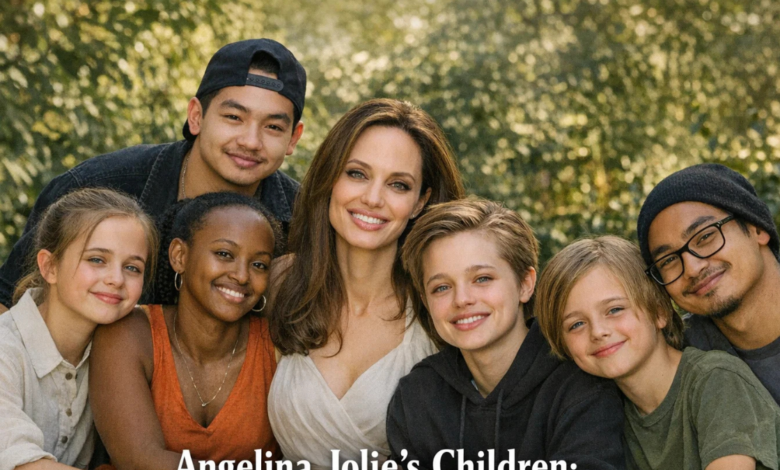
Angelina Jolie’s Children.Few families in the public eye have captivated and inspired the world quite like that of Angelina Jolie. What began as one of Hollywood’s most famous women navigating single motherhood evolved into a powerful, multicultural family unit, often referred to as a “mini-UN.” The story of Angelina Jolie children is not merely a tabloid chronicle of celebrity offspring. It is a profound narrative about intentional family building, transnational adoption ethics, conscious parenting in the spotlight, and the intertwining of personal life with global humanitarianism. This family represents a radical departure from traditional Hollywood archetypes, becoming instead a living project dedicated to compassion, service, and cultural understanding. Their journey offers a unique lens through which to examine modern parenthood, identity, and the challenges of raising globally-minded children under an unrelenting media microscope. From the bustling streets of Phnom Penh to the dusty landscapes of Namibia, each addition to the Jolie-Pitt family marked a new chapter, not just for the parents, but for the world watching a new model of family take shape. This deep dive explores the lives, upbringing, and individual paths of Maddox, Pax, Zahara, Shiloh, Knox, and Vivienne, revealing how they have collectively shaped one of the most influential actors and activists of our time.

The Founding of a Family: Maddox Chivan and Zahara Marley
The arrival of Maddox Chivan Jolie-Pitt in 2002 fundamentally redirected the course of Angelina Jolie’s life. Adopted from an orphanage in Cambodia, Maddox’s integration into Jolie’s world coincided with her deepening commitment to international aid, first as a UNHCR Goodwill Ambassador and later as a Special Envoy. He was not just a child; he became her anchor and her inspiration, accompanying her to refugee camps and film sets from a remarkably young age. This immersive, on-the-go upbringing forged an exceptionally close bond and positioned Maddox as a co-pilot in her journey of global citizenship, long before his siblings arrived. His presence is often credited with catalyzing Jolie’s evolution from a Hollywood star into a dedicated humanitarian and diplomat, fundamentally altering her priorities and life’s mission.
Zahara Marley Jolie-Pitt’s adoption from Ethiopia in 2005 expanded the family’s African roots and publicly underscored Jolie’s commitment to children in dire circumstances. Zahara’s early health struggles, requiring major surgery, highlighted the very real challenges and profound responsibilities of international adoption. This experience, far from a simple celebrity story, brought global attention to healthcare disparities and the complexities of giving a child a new life. Zahara, with her poised and regal demeanor, has often been described by her mother as a strong, nurturing force within the sibling group. Her journey is a testament to resilience and the transformative power of a loving family, solidifying the public’s perception of Jolie not just as an actress, but as a fierce and devoted mother building a family against all odds.
Expanding the Brood: Pax Thien and Shiloh Nouvel
The adoption of Pax Thien Jolie-Pitt from Vietnam in 2007 introduced another layer to the family’s complex tapestry. Originally named Pham Quang Sang, Pax was older at the time of his adoption, coming from a Ho Chi Minh City orphanage. This presented unique challenges of attachment and integration, which the family navigated privately but which spoke to the realities of adopting older children. Jolie has spoken about the patience and dedicated family time required to build trust and a sense of belonging, a process that she described as a beautiful, gradual unfolding. Pax, whose name means “peaceful sky,” has grown into a creative and artistic young man, often credited with a quiet thoughtfulness and a talent for visual arts, reflecting the family’s emphasis on individual expression.
The birth of Shiloh Nouvel Jolie-Pitt in 2006 was a global media event, with the first photographs commanding millions for charity. Biologically the first child to both Jolie and Brad Pitt, Shiloh’s arrival completed the family’s blend of biological and adopted children. From a very young age, Shiloh famously expressed a preference for more masculine clothing and short hair, a choice her parents publicly and steadfastly supported. This became a landmark moment for discussions on gender expression and parenting, with Jolie stating they simply followed their child’s lead. Shiloh’s journey has been one of self-possession and independence, often photographed with a confident, understated style that has made them an inadvertent icon for young people exploring identity beyond traditional norms.
The Final Additions: Knox Léon and Vivienne Marcheline
The 2008 birth of twins Knox Léon and Vivienne Marcheline in the coastal town of Nice, France, completed the Jolie-Pitt family of eight. Their birth was one of the most anticipated celebrity events of the decade, with media outlets stationed for weeks to capture the first images, which were again sold with proceeds donated to charity. The twins’ arrival solidified the family as a self-contained, bustling unit, often described by Jolie as a “gang” or a “team.” Knox and Vivienne, though the youngest, have been raised with the same global perspective as their older siblings, traveling extensively and exposed to their mother’s humanitarian work from infancy, ensuring the family’s values were seamlessly intergenerational.
Vivienne, named after Jolie’s beloved mother Marcheline Bertrand, has been her mother’s quiet shadow on film sets and humanitarian trips, displaying an early and serious maturity. Knox, often seen as more playful and athletic, rounds out the diverse personalities within the sibling group. Despite their fame, Jolie has worked tirelessly to give them as normal a childhood as possible, emphasizing simple pleasures, education, and family time over luxury and privilege. The twins represent the culmination of Jolie’s family vision—a close-knit, culturally rich, and service-oriented unit where each child, regardless of origin, is an equal and cherished member.
Parenting Philosophy: Conscience, Culture, and Normalcy
Angelina Jolie’s approach to raising her children is a deliberate fusion of global awareness and grounded simplicity. She has consistently emphasized teaching them about their birth cultures, ensuring they maintain a connection to their heritage through travel, food, language, and community. For Maddox and Pax, this meant regular trips to Cambodia and Vietnam; for Zahara, engagement with Ethiopian culture and community. This isn’t treated as a sidebar to their lives but as a core component of their identity. Concurrently, Jolie has famously instilled a strong sense of social justice, taking her children to refugee camps, UN meetings, and on aid trips to impress upon them their privilege and responsibility to others.
Despite their extraordinary life, Jolie has fiercely championed the pursuit of normalcy for her Angelina Jolie children. This has meant enrolling them in local schools, encouraging mundane hobbies, cooking at home, and protecting their privacy with a sometimes-legal ferocity. She has spoken about the importance of them understanding the value of money, the dignity of work, and the simplicity of being present with each other. Her parenting is less about rigid rules and more about fostering independent thinkers with strong moral compasses. As she told Vogue, “I’m conscious of what they need to know, what they need to see, and what I need to shield them from.” This balance between exposing them to the world’s harsh realities and providing a soft, secure landing place defines her philosophy.
Navigating Public Scrutiny and Family Challenges
The intense public fascination with the Jolie-Pitt family has been a double-edged sword, providing a platform for advocacy while relentlessly invading their private lives. Every milestone, from adoptions to births to simple family outings, has been a global news story. The children have grown up with paparazzi lenses perpetually trained on them, a reality Jolie has managed with a combination of strategic media engagement (often for charitable causes) and aggressive legal protection of their image and privacy. She has used this spotlight deliberately at times, such as sharing Zahara’s surgery story or Shiloh’s gender expression, to foster broader public dialogue on important issues.
The family’s most profound challenge, however, was the highly publicized dissolution of Jolie’s marriage to Brad Pitt in 2016. The subsequent custody battle placed the six Angelina Jolie children at the center of a painful, public legal drama. Reports and allegations transformed the family’s narrative from one of idyllic global citizenship to one of private strife. Jolie shifted her focus almost entirely to providing stability and healing for her children, pulling back from film work and centering their emotional well-being. This period tested the family’s resilience, with Jolie often stating her children were her primary concern and her reason for navigating the difficult process. The experience underscored the immense pressure of raising a family in the public eye during times of profound private crisis.
Education and Global Citizenship
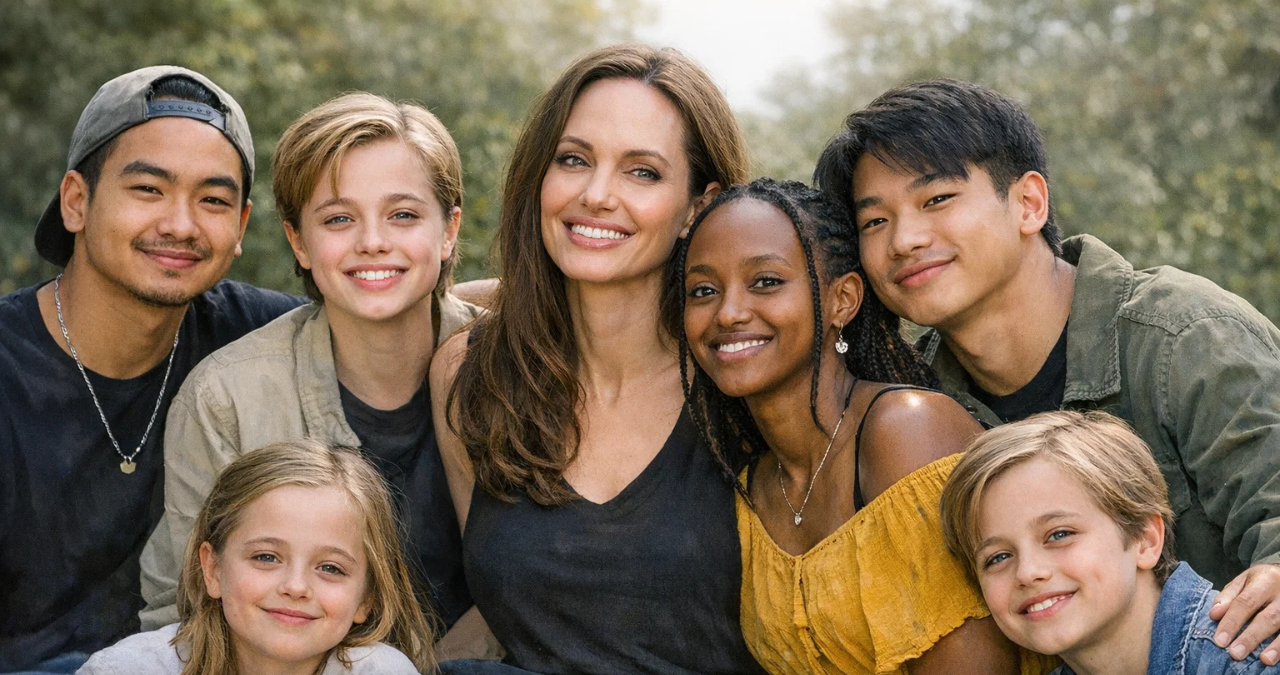
Education for the Jolie children has been unconventional and experiential, mirroring their mother’s belief in learning through engagement with the world. While they have attended traditional schools, their curriculum has been vastly supplemented by real-world exposure. They have sat in on UN conferences, visited war zones and refugee camps with their mother, and learned history by walking through the temples of Angkor Wat or the streets of Naivasha. Language learning is a priority, with the children reportedly speaking or studying multiple languages including French, Khmer, Vietnamese, and Arabic. This education style aims to produce not just scholars, but empathetic, informed global citizens.
Jolie has also co-founded educational institutions that reflect these values. The Maddox Jolie-Pitt Foundation (MJP), originally focused on environmental conservation in Cambodia, evolved into a community development project, allowing Maddox’s namesake to have a tangible impact on his birth country. Furthermore, the Jolie-Pitt Foundation donated millions to global humanitarian causes, often involving the children in understanding where the support was going. This hands-on philanthropic education teaches them that their platform and resources come with a duty to act. Their schooling is, in essence, a lifelong lesson in the interconnection of global communities and the importance of using one’s position for good.
Individual Passions and Emerging Paths
As the Jolie children have entered young adulthood, their distinct personalities and interests have come into sharper public view, albeit still guarded by their mother. Maddox studied biochemistry at Yonsei University in South Korea and has worked behind the scenes in film, contributing to the score and as a producer on projects like First They Killed My Father. He represents the blend of scientific curiosity and artistic inclination fostered in the home. Zahara, often seen as a poised and elegant presence, is attending Spelman College, a historically Black women’s institution, a choice that deeply honors her heritage and speaks to her own evolving identity.
Shiloh has pursued dance with impressive dedication, training rigorously in both ballet and hip-hop, showcasing a physical discipline and artistry. Pax maintains a more private life but has shared his talent for visual art. The twins, Knox and Vivienne, while younger, have already had glimpses of the film world, with Vivienne appearing in Maleficent as a young Aurora. Jolie has consistently emphasized that her role is to support their individual choices, not to steer them toward any particular path, especially not necessarily toward acting. The emerging narrative is one of six unique individuals using the uncommon tools and perspectives of their upbringing to forge their own ways in the world.
Table: The Jolie Children: Origins, Names, and Notable Paths
| Child’s Name | Year Joined Family | Origin | Name Meaning/Origin | Noted Interests/Paths |
|---|---|---|---|---|
| Maddox Chivan | 2002 (Adopted) | Cambodia | “Maddox”: Welsh, “benefactor’s son”; “Chivan”: Khmer, “life” | Biochemistry, film production (scoring, producing) |
| Zahara Marley | 2005 (Adopted) | Ethiopia | “Zahara”: Arabic, “flower”; “Marley”: after Bob Marley | Attending Spelman College, fashion, advocacy |
| Pax Thien | 2007 (Adopted) | Vietnam | “Pax”: Latin, “peace”; “Thien”: Vietnamese, “sky” or “heavenly” | Visual arts, photography, culinary arts |
| Shiloh Nouvel | 2006 (Born) | Namibia, Africa | “Shiloh”: Hebrew, “peaceful”; “Nouvel”: French, “new” | Dance (ballet, hip-hop), music |
| Knox Léon | 2008 (Born) | France | “Knox”: Old English, “round hill”; “Léon”: French, “lion” | Athletics, appears more private |
| Vivienne Marcheline | 2008 (Born) | France | “Vivienne”: Latin, “alive”; “Marcheline”: after grandmother | Acting (child role in Maleficent), academic |
The Role of Heritage and Identity
For the adopted Angelina Jolie children, maintaining a connection to their birth cultures has been a non-negotiable pillar of their upbringing. Jolie has described this as her responsibility—to ensure Maddox, Pax, and Zahara never feel severed from their roots. This has involved consistent travel, celebrating cultural holidays, building relationships with communities in their home countries, and incorporating traditions into their daily lives. For Zahara, this has included connecting with Ethiopian communities and, famously, her mother seeking out and introducing her to women who looked like her, such as the late Congresswoman Shirley Chisholm in a painting, to provide mirrors for her identity.
This conscious nurturing of heritage is a proactive response to the complex questions of identity that transracial and transnational adoptees often face. It moves beyond symbolism to actionable integration. The children’s names themselves often honor their origins. Furthermore, Jolie’s humanitarian work in these regions—like her conservation and development efforts in Cambodia through the MJP Foundation—creates a tangible, positive legacy tied to their homelands. This approach acknowledges that love is the foundation, but a complete identity for her children must also be built on an honest, respectful, and connected understanding of where they come from.
Philanthropy as a Family Legacy
Philanthropy is not an occasional activity for the Jolie family; it is the bedrock of their shared value system. The children have been involved in charitable work not as a photo opportunity, but as a matter-of-course aspect of life. From a very young age, they accompanied their mother to field visits with UNHCR, handing out supplies or simply being present, learning empathy through direct exposure. The Jolie-Pitt Foundation, established in 2006, channeled millions into global causes, from building medical facilities in Ethiopia to supporting refugee rights, making philanthropy the family’s collective professional and personal enterprise.
This immersive exposure aims to instill a lifelong commitment to service. The quote from Jolie that perhaps best encapsulates this ethos was given in a 2021 interview with Time: “I want my children to grow up knowing they have a voice—and that it’s their responsibility to use it for those who don’t.” This sentiment underscores that their privilege is directly linked to a duty. The philanthropic model she has built is one of engaged, informed giving—where her children understand the systemic issues behind the problems they seek to address. It is a legacy far more valuable than any financial inheritance, shaping them into advocates and activists in their own right.
Life After the High-Profile Split: A Mother’s Focus
The years following the separation from Brad Pitt have seen Angelina Jolie recalibrate her life almost entirely around her children. Her career choices have become more selective, often aligned with her advocacy or projects she believes carry important messages for her family and the world. She has relocated with them internationally, spending significant time in Cambodia and other locations that connect them to their heritage or offer respite from the Hollywood glare. Public appearances, when they involve the children, are carefully curated, often tied to the premiere of one of her films where they can participate in a professional milestone.
This period has highlighted her role as a single mother to six children navigating adolescence and young adulthood under extraordinary circumstances. She has spoken about the challenges of co-parenting through conflict and her primary goal of ensuring her children feel safe, heard, and loved. Her work as a professor at the London School of Economics, her focus on directing more politically-charged films like First They Killed My Father, and her ongoing UN work all seem filtered through the lens of what she wants her children to learn and the world she hopes they will inherit. The family, while changed, remains her central project and source of strength.
Media Portrayal vs. Family Reality
The chasm between the media’s portrayal of the Jolie family and their private reality is vast. Tabloids have cycled through countless narratives—the perfect global family, the tumultuous breakup, speculative rifts between the Angelina Jolie children and their father, and analyses of each child’s style or demeanor. Jolie has actively fought against this, using legal means to protect their privacy and occasionally using platforms like The New York Times or Vogue to offer her own, more nuanced account. She acknowledges the strangeness of their life, once noting that her children know that a man with a camera lurking in the bushes is a bizarre but normalized part of their existence.
The reality Jolie describes is one of ordinary chaos within an extraordinary framework. It’s a home where world discussions happen over dinner, but so do squabbles over chores and homework. She shares anecdotes about kids rolling their eyes at their mother, playing with dogs, and worrying about college exams. This conscious effort to demystify their lives is a protective strategy. By revealing just enough of the normalcy, she reclaims their narrative from the sensationalists and reinforces that at their core, they are a family navigating the universal trials of connection, growth, and love, albeit on a global stage.
Conclusion: A Legacy Redefining Family and Purpose
The journey of Angelina Jolie and her six children is an ongoing story that has redefined what a modern, purposeful family can look like. It is a legacy built not on bloodlines alone, but on conscious choice, radical empathy, and a steadfast commitment to making the world a smaller, more compassionate place. The Angelina Jolie children—Maddox, Zahara, Pax, Shiloh, Knox, and Vivienne—are not mere extensions of their famous mother’s celebrity. They are her partners in humanitarian work, her students in global citizenship, and the driving force behind her most profound transformations. Their upbringing, blending diverse heritages with a unified family culture, offers a powerful blueprint for raising empathetic, globally-aware individuals.
As these young adults continue to step into their own, they carry forward a unique inheritance: a deep understanding of both immense privilege and profound human struggle, a respect for diverse cultures, and a mother’s unwavering lesson that to whom much is given, much is required. The family’s story, with all its joys and very public challenges, remains one of the most compelling narratives of our time about love’s capacity to build bridges across continents, cultures, and circumstances. The ultimate impact of Angelina Jolie’s parenting may well be seen not in tabloid headlines, but in the lives of service and purpose her children go on to lead.
Frequently Asked Questions
How many biological children does Angelina Jolie have?
Angelina Jolie has three biological children: Shiloh, born in 2006 in Namibia, and twins Knox and Vivienne, born in 2008 in France. They are joined by her three adopted children, Maddox, Zahara, and Pax, completing the family of six Angelina Jolie children.
What countries are Angelina Jolie’s adopted children from?
Angelina Jolie’s adopted children come from three different countries, reflecting her deep connection to various global communities. Maddox was adopted from Cambodia in 2002, Zahara from Ethiopia in 2005, and Pax from Vietnam in 2007. She has worked diligently to ensure each child maintains a strong link to their birth culture.
How has Angelina Jolie involved her children in her humanitarian work?
Jolie has involved her children in humanitarian work by immersing them in it from a very young age. She has taken them on visits to refugee camps, UN meetings, and field projects, not as spectators but as participants learning about global issues firsthand. This experiential education is a core part of her philosophy, teaching the Angelina Jolie children about empathy, privilege, and responsibility through direct exposure.
What are the names of all of Angelina Jolie’s children?
Angelina Jolie’s six children are, in order of joining the family: Maddox Chivan, Zahara Marley, Shiloh Nouvel, Pax Thien, and twins Knox Léon and Vivienne Marcheline. The family was collectively known as the Jolie-Pitt family during her marriage to Brad Pitt.
How does Angelina Jolie protect her children’s privacy?
Jolie protects her children’s privacy through a multi-faceted approach. She rarely shares their images on her own social media, uses legal action against intrusive paparazzi, and carefully controls any interviews involving them. She has also strategically sold first photos of her newborns to magazines with the condition that 100% of proceeds go to charity, turning media demand into a philanthropic tool for her Angelina Jolie children.