Statement of Purpose: A Complete Guide to Writing a Powerful Statement of Purpose
Statement of Purpose.A statement of purpose is one of the most important documents you may ever write for your education or career. Whether you are applying to a university, scholarship, internship, or job program, a strong statement of purpose helps you explain who you are, what you want to achieve, and why you deserve the opportunity.
In simple words, a statement of purpose tells your story. It shows your goals, passion, and plans for the future. Admissions officers and organizations use it to understand your personality, motivation, and academic interests.
Think of it as your personal voice on paper. Your grades and certificates show your achievements, but your statement of purpose explains the person behind those achievements. A well-written statement can make you stand out among hundreds or even thousands of applicants.
In this complete guide, you will learn everything about writing a strong statement of purpose, including its meaning, structure, purpose, writing tips, and examples.
What Is a Statement of Purpose?
A statement of purpose (often called SOP) is a written essay that explains your academic background, career goals, and reasons for applying to a specific program or institution.
It answers important questions such as:
- Who are you?
- What do you want to study?
- Why do you want to study this subject?
- What are your future goals?
- Why did you choose this university or program?
In many applications, the statement of purpose is required for:
- University admissions
- Scholarships
- Research programs
- Internships
- Graduate or postgraduate studies
Unlike a resume, which lists facts, a statement of purpose explains your story, motivation, and ambition.
Why Is a Statement of Purpose Important?
A strong statement of purpose can open doors to great opportunities. Admissions committees read it carefully because it shows more than just grades.
Here are some reasons why a statement of purpose matters:
- Shows your personality – It tells reviewers who you are as a person.
- Explains your motivation – It shows why you are passionate about your field.
- Highlights your goals – It explains what you want to achieve in the future.
- Connects your past and future – It links your education with your career plans.
- Demonstrates communication skills – It shows how clearly you can express ideas.
In many cases, students with similar academic records are compared. A compelling statement of purpose can be the deciding factor.
Main Goals of a Statement of Purpose
Every statement of purpose should have clear goals. Its job is to convince the reader that you are the right candidate for the opportunity.
The main goals include:
- Explaining your academic background
- Describing your interest in the subject
- Showing your career goals
- Proving your commitment and motivation
- Demonstrating why the program fits your ambitions
A good statement of purpose connects these ideas smoothly so the reader can easily follow your journey.
Key Elements of a Strong Statement of Purpose
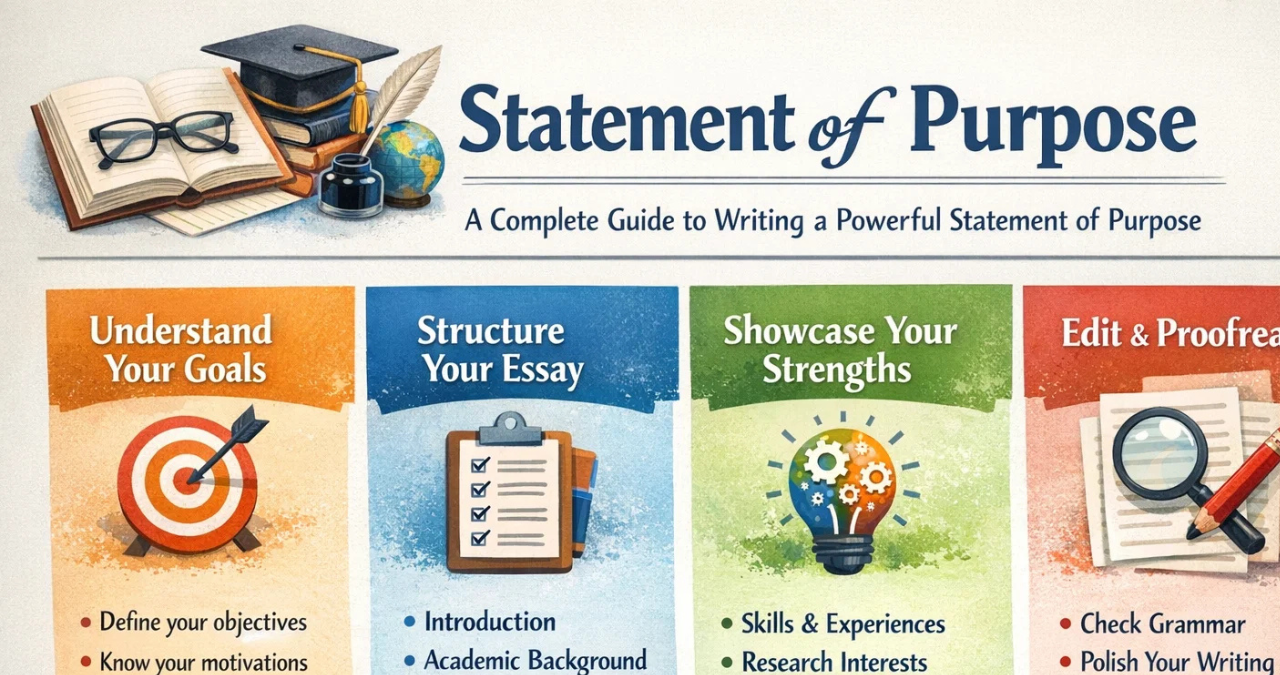
A successful statement of purpose usually includes several important elements.
Personal Introduction
Start by introducing yourself and your interests. You can mention how you became interested in your field of study.
Academic Background
Explain your education and the subjects you studied. Mention projects, research, or achievements related to your chosen field.
Professional Experience
If you have work or internship experience, describe how it helped you gain skills or knowledge.
Career Goals
Clearly explain your short-term and long-term goals.
Reason for Choosing the Program
Explain why you chose this specific university or program.
Conclusion
End your statement of purpose with confidence and enthusiasm for the opportunity.
Basic Structure of a Statement of Purpose
Writing a statement of purpose becomes easier when you follow a clear structure.
| Section | What to Include | Purpose |
|---|---|---|
| Introduction | Personal background and interest | Grab the reader’s attention |
| Academic History | Education, courses, achievements | Show your preparation |
| Experience | Internships, projects, research | Demonstrate practical knowledge |
| Goals | Career plans and ambitions | Show your vision |
| Program Fit | Why this university/program | Show alignment |
| Conclusion | Final summary and enthusiasm | Leave a strong impression |
This structure helps ensure your statement of purpose flows logically and clearly.
How to Start a Statement of Purpose
The opening paragraph of your statement of purpose is very important. It should grab attention and make the reader want to continue.
Here are some effective ways to start:
- Share a personal story related to your field.
- Describe a moment of inspiration.
- Explain a problem or challenge that made you curious about the subject.
- Discuss an experience that shaped your career goals.
Example opening idea:
“My curiosity about technology began when I built my first computer in high school. That moment sparked a deep interest in computer science and inspired me to pursue advanced studies in the field.”
A strong introduction makes your statement of purpose memorable.
Tips for Writing an Effective Statement of Purpose
Writing a great statement of purpose takes time and careful thought. Here are some helpful tips.
Be Honest and Authentic
Always tell your real story. Don’t exaggerate achievements or create false experiences.
Keep the Language Clear
Use simple and clear English. Avoid complicated words and long sentences.
Show Passion
Admissions committees want to see enthusiasm and motivation.
Stay Focused
Every paragraph should support your main goal.
Edit and Revise
Review your statement of purpose several times to remove mistakes.
Additional helpful practices include:
- Asking a teacher or mentor for feedback
- Checking grammar and spelling
- Keeping the essay within the word limit
Common Mistakes in a Statement of Purpose
Even strong applicants sometimes make mistakes in their statement of purpose. Avoid these common problems.
- Writing a generic essay for every university
- Including irrelevant personal stories
- Repeating information from the resume
- Using too many technical terms
- Writing long and confusing sentences
Another common mistake is focusing only on past achievements. A great statement of purpose should also show future goals.
Example Outline of a Statement of Purpose
Below is a simple outline you can follow when writing your statement of purpose.
Introduction
- Personal interest in the subject
- Short background story
Academic Background
- Education and achievements
- Important courses or research
Experience
- Internships or projects
- Skills gained
Career Goals
- Short-term plans
- Long-term ambitions
Why This Program
- Special features of the university
- How it supports your goals
Conclusion
- Final statement of motivation
- Appreciation for the opportunity
This outline helps organize your statement of purpose effectively.
How Long Should a Statement of Purpose Be?
The length of a statement of purpose usually depends on the institution.
Most universities require:
- 500 to 1000 words for standard applications
- 1000 to 1500 words for graduate programs
- 1–2 pages in most cases
Always check the instructions before writing your statement of purpose.
How a Statement of Purpose Differs from a Personal Statement
Many people confuse a statement of purpose with a personal statement, but they are slightly different.
| Feature | Statement of Purpose | Personal Statement |
|---|---|---|
| Focus | Academic and career goals | Personal experiences |
| Tone | Professional and academic | Personal and reflective |
| Purpose | Explain study or research goals | Share personal journey |
| Usage | Graduate programs, research | Scholarships, general admissions |
Both documents are important, but a statement of purpose focuses more on your academic path.
Final Thoughts on Writing a Statement of Purpose
Writing a powerful statement of purpose may seem challenging at first, but with careful planning and honest storytelling, it becomes much easier. Remember, this document is your chance to speak directly to the people reviewing your application.
A successful statement of purpose clearly explains your past experiences, present interests, and future goals. It shows your passion for learning and your readiness to contribute to your chosen field.
Take your time, write from the heart, and revise your work carefully. When done well, a thoughtful statement of purpose can turn an ordinary application into an unforgettable one.
In the end, a strong statement of purpose doesn’t just describe your goals it shows the world what you are capable of achieving.
You may also read
Significant Synonym: A Complete Guide to Words That Mean “Significant”