Is IBS a Disability? Navigating the Legal, Medical, and Personal Realities
IBS a Disability.Irritable Bowel Syndrome (IBS) is a common, chronic disorder affecting the large intestine, characterized by a relentless cluster of symptoms like abdominal pain, bloating, and altered bowel habits. For millions, it’s a manageable annoyance. For others, it’s a debilitating condition that dictates daily choices, social engagements, and career paths. This stark contrast leads to a complex and often emotionally charged question: is IBS a disability? The answer isn’t a simple yes or no; it exists in a nuanced landscape defined by legal statutes, medical severity, personal experience, and social perception. This comprehensive guide will dissect this multifaceted question, providing clarity on your rights, pathways to accommodation, and strategies for reclaiming agency over your life and health. We will move beyond definitions to explore the tangible implications of living with severe IBS and the frameworks designed to support you.
Understanding Disability Through Multiple Lenses
IBS a DisabilityThe concept of disability is not monolithic. How a medical condition is classified depends heavily on the context—be it legal, medical, or social. To understand if IBS qualifies, we must first examine these distinct but overlapping frameworks. Each offers a different perspective on what constitutes a disability and what protections or recognition may follow.
In the medical model, disability is often viewed as a problem residing within the individual, a direct result of a health condition or impairment. The focus is on diagnosis, treatment, and management. A physician may document the severity and frequency of your IBS symptoms, their impact on bodily functions, and your response to treatment. This clinical assessment is crucial, as it provides the evidentiary foundation for any subsequent claims under legal models. However, this model alone doesn’t address the barriers posed by external environments.
IBS a Disability Conversely, the social model of disability posits that people are disabled more by societal barriers—inaccessible physical environments, prejudicial attitudes, and inflexible systems—than by their impairments. Under this lens, the question of whether IBS is a disability shifts. It’s less about the specific gastrointestinal symptoms and more about how a world designed without chronic, unpredictable conditions in mind creates disability. An office without flexible hours or ready bathroom access can disable a person with severe IBS far more than the condition itself.
The Legal Definition: The Americans with Disabilities Act (ADA) and IBS
IBS a Disability In the United States, the primary legal arbiter of disability status is the Americans with Disabilities Act (ADA), as amended. The ADA defines a disability as a physical or mental impairment that substantially limits one or more major life activities. Crucially, it also covers individuals with a record of such an impairment or who are regarded as having one. This definition is intentionally broad and is applied on a case-by-case basis.
For IBS to be considered a disability under the ADA, an individual must demonstrate that their specific manifestation of the condition “substantially limits” a major life activity. Major life activities include, but are not limited to, functions such as caring for oneself, performing manual tasks, eating, sleeping, walking, standing, lifting, bending, speaking, breathing, learning, reading, concentrating, thinking, communicating, and working. The operation of major bodily functions, such as digestive, bowel, and brain functions, are also explicitly covered. Therefore, severe IBS that significantly disrupts digestive or bowel function can meet this criteria.
Substantial Limitation: The Key Threshold for IBS
IBS a Disability The pivotal phrase “substantially limits” requires careful interpretation. It does not mean “utterly prevents,” but rather indicates a restriction in the condition, manner, or duration under which a major life activity can be performed compared to most people. The assessment looks at the severity, frequency, and expected duration of the limitation. An occasional flare-up may not qualify, but chronic, debilitating symptoms likely would.
IBS a Disability For example, if IBS pain and urgency are so severe and frequent that an individual cannot reliably leave their home for extended periods, cannot sit through a work meeting or a movie, or must constantly be aware of bathroom locations, these are substantial limitations to activities like traveling, working, and socializing. The episodic nature of IBS is also considered; an impairment that is episodic or in remission is still a disability if it would substantially limit a major life activity when active. This is a critical point for a condition like IBS, where symptoms can wax and wane.
IBS in the Workplace: Reasonable Accommodations
IBS a Disability When IBS substantially limits the major life activity of working, the ADA obligates covered employers to provide “reasonable accommodations.” These are modifications or adjustments to a job or work environment that enable a qualified employee with a disability to perform essential job functions. The process typically begins with a confidential dialogue between the employee and employer.
IBS a Disability Common reasonable accommodations for IBS might include a flexible work schedule or telework options IBS a Disability to manage morning symptoms or fatigue, permission to use a private or closer restroom, a work station located near a restroom, flexible break policies, the ability to work a modified shift, or permission to take unscheduled restroom breaks as needed. The employer is not required to provide accommodations that pose an “undue hardship,” but they are expected to engage in an interactive process to find a workable solution.
Navigating the Interactive Process and Disclosure
IBS a Disability Disclosing an IBS diagnosis at work is a deeply personal decision with legal and professional ramifications. You are not required to disclose unless you are requesting a reasonable accommodation. If you do choose to request an accommodation, you will need to provide enough information to show that you have a disability as defined by the ADA and that the accommodation is needed.
IBS a Disability The interactive process is a collaborative effort. You might say, “I have a medical condition that sometimes requires urgent, unscheduled restroom breaks. I am requesting an accommodation to ensure I can manage this while performing my job.” The employer may ask for limited documentation from your healthcare provider to confirm the disability and the need for the specific accommodation. The goal is to arrive at a practical, effective solution that supports your productivity.
Beyond the ADA: Other Legal and Benefit Frameworks
IBS a Disability The ADA is not the only relevant law. The Family and Medical Leave Act (FMLA) may provide eligible employees with up to 12 weeks of unpaid, job-protected leave per year for a “serious health condition,” which can include IBS if it requires inpatient care or continuing treatment by a healthcare provider. This can be vital for managing severe flares or medical procedures.
IBS a Disability For longer-term inability to work, individuals may explore applying for Social Security Disability Insurance (SSDI) or Supplemental Security Income (SSI). The Social Security Administration (SSA) has a much stricter definition of disability, requiring that the condition be so severe it prevents any “substantial gainful activity” and is expected to last at least one year or result in death. Winning an SSDI claim for IBS alone is notoriously difficult and requires exhaustive medical evidence, but it is not impossible in the most extreme, documented cases.
The Global Perspective on IBS as a Disability
IBS a Disability The recognition of IBS as a potential disability varies significantly across the world. In the United Kingdom, under the Equality Act 2010, a disability is defined as a physical or mental impairment that has a “substantial” and “long-term” negative effect on one’s ability to do normal daily activities. Much like the ADA, severe IBS can meet this definition, affording protections against discrimination and a duty for employers to make reasonable adjustments.
IBS a Disability Other countries, such as Canada (under the Canadian Human Rights Act) and Australia (under the Disability Discrimination Act), have similar human rights-based frameworks where the impact of the condition, rather than a specific list of diagnoses, determines protection. This global trend towards a functional, rather than a purely diagnostic, assessment of disability is beneficial for individuals with invisible, chronic conditions like IBS.
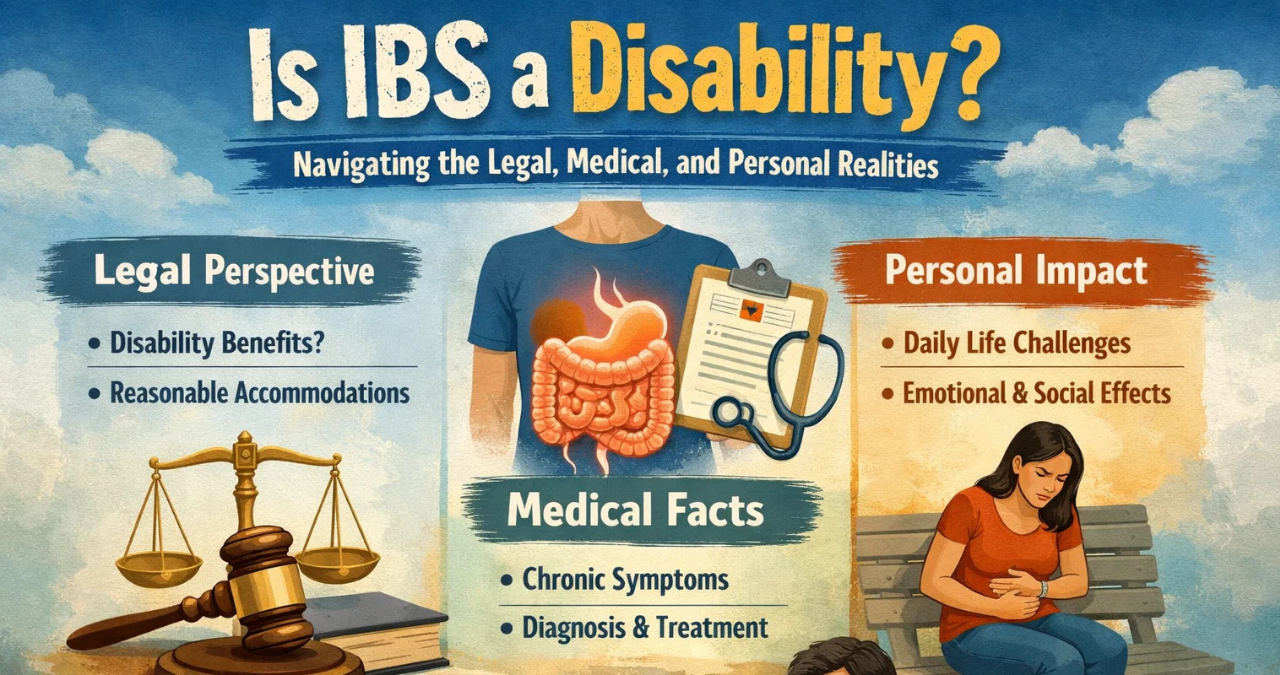
The Medical Severity Spectrum: From Mild to Debilitating
IBS a Disability Clinically, IBS exists on a vast spectrum. The Rome IV diagnostic criteria classify IBS by its predominant bowel habit: IBS with constipation (IBS-C), IBS with diarrhea (IBS-D), IBS with mixed bowel habits (IBS-M), or unclassified. However, a more functional classification looks at severity. Mild IBS may cause occasional, manageable symptoms that don’t interfere with life. Moderate IBS causes disruptive symptoms that affect daily activities.
Severe or debilitating IBS is a different reality entirely. It often involves constant or near-constant pain, profound fatigue (“IBS fatigue”), severe bloating, and bowel urgency that leads to fecal incontinence or a crippling fear of it. This level of severity can lead to malnutrition, weight loss, anxiety, depression, and a severely constricted quality of life. It is this severe presentation that unequivocally crosses the line into the realm of a disabling condition, both medically and functionally.
The Invisible Burden: Psychosocial and Quality of Life Impacts
IBS a Disability The disability of IBS often extends far beyond physical symptoms. The psychosocial burden is immense and frequently constitutes the most disabling aspect. The constant, hyper-vigilant planning—mapping every outing around bathroom locations, scrutinizing menus, pre-emptively declining invitations—is mentally exhausting. This can lead to social isolation, anxiety, and depression.
IBS a Disability The condition also carries a significant stigma, being historically dismissed as “just stress” or a “women’s problem.” This invalidation from society, and sometimes even healthcare providers, compounds the suffering. The financial burden of treatments, specialized diets, and missed work adds another layer of stress. This holistic erosion of well-being is a core component of why, for many, IBS is a disability in the truest sense of the word.
Diagnosis and Documentation: Building Your Case
A solid, well-documented medical history is the cornerstone of any claim for accommodations or benefits. A formal diagnosis from a gastroenterologist, following the Rome IV criteria and after ruling out other conditions like IBD or celiac disease, is essential. Vague descriptions of “stomach problems” are not sufficient.
Critical documentation includes detailed physician notes that describe: the specific symptoms (pain, diarrhea, constipation, bloating), their frequency and severity (using standardized scales if possible), their duration, all treatments tried and their outcomes, and—most importantly—a clear statement of how the symptoms impact your daily activities and work functions. Phrases like “the patient experiences incapacitating abdominal pain for 2-3 hours daily” or “urgent diarrhea occurs 5-8 times per day, preventing uninterrupted work or travel” are powerful.
Strategies for Managing Life with a Debilitating Condition
Living well with severe IBS requires a multi-pronged, proactive strategy that goes beyond medication. Dietary approaches, like the Low FODMAP diet (undertaken with a dietitian’s guidance), can be transformative for many. Stress-reduction techniques, such as cognitive behavioral therapy (CBT) specifically for IBS, hypnotherapy (gut-directed hypnotherapy), and mindfulness, have strong evidence for reducing symptom severity and central nervous system amplification.
Pacing and energy management, concepts borrowed from other chronic illness communities, are vital. This involves planning your week to balance activity with rest, learning to say no, and breaking tasks into manageable chunks. Building a supportive healthcare team—a compassionate gastroenterologist, a knowledgeable dietitian, and a mental health professional familiar with chronic illness—is non-negotiable for navigating this journey.
Advocacy and Empowerment: Finding Your Voice
Becoming your own advocate is perhaps the most critical skill. In the doctor’s office, this means coming prepared with symptom journals and questions. In the workplace, it means understanding your rights and communicating your needs clearly and professionally. In your personal life, it may mean educating friends and family about your condition to build a support network.
Connecting with others who understand is powerfully validating. Online communities and support groups, such as those through the International Foundation for Gastrointestinal Disorders (IFFGD), can provide practical tips, emotional support, and a sense of not being alone. As one patient advocate succinctly put it: “The unpredictability of IBS doesn’t just disrupt your gut; it disrupts your life. Recognizing its potential as a disabling condition is the first step toward building the accommodations and resilience needed to live fully again.”
A Comparative Framework: IBS and Disability Recognition
The table below illustrates how IBS is evaluated under different frameworks, highlighting the criteria and potential outcomes.
| Framework | Primary Focus | Key Criteria for IBS | Potential Outcome / Protection |
|---|---|---|---|
| Medical Model | Diagnosis & Pathology | Rome IV criteria, symptom severity, exclusion of other diseases | Clinical diagnosis of IBS (mild, moderate, severe) |
| Legal (ADA/USA) | Functional Limitation | Substantial limitation of major life activity/bodily function | Qualification as a disability → Right to reasonable accommodations |
| Legal (SSA/USA) | Inability to Work | Inability to perform any substantial gainful activity | Approval for SSDI/SSI benefits (very high bar for IBS) |
| Social Model | Societal Barriers | How environment/attitudes create restriction | Identification of disabling barriers → Advocacy for access & change |
| Personal/Experiential | Quality of Life | Daily impact, unpredictability, psychosocial burden | Self-identification as disabled or chronically ill |
Conclusion
So‘IBS a Disability? The definitive answer is: it can be. For individuals with severe, debilitating symptoms that substantially limit major life activities like working, traveling, and socializing, IBS is not merely a gastrointestinal issue—it is a chronic, disabling health condition deserving of recognition, accommodation, and respect. The path to that recognition lies at the intersection of robust medical documentation, an understanding of your legal rights, and the implementation of holistic management strategies. Whether through ADA accommodations that enable a fulfilling career or personal strategies that reclaim daily joy, the goal is the same: to reduce the disability imposed by the condition and the environment, and to empower individuals to live with dignity and agency. Acknowledging the disabling potential of severe IBS is not about claiming a label of weakness, but about accessing the tools and protections necessary for strength and resilience.
Frequently Asked Questions
Can I get workplace accommodations for IBS?
Yes, if your IBS symptoms substantially limit a major life activity, including the activity of working, you are entitled to request reasonable accommodations under the ADA. This requires engaging in an interactive process with your employer and may involve providing documentation from your doctor outlining your limitations and the need for specific changes, such as flexible hours or ready bathroom access.
Is IBS considered a disability for Social Security benefits?
It is extremely challenging, but not categorically impossible. The SSA requires proof that your IBS prevents you from performing any substantial gainful activity and is expected to last over a year. Approval typically requires voluminous medical evidence, documentation of all treatment failures, and often co-occurring conditions like severe depression or anxiety. Most successful claims involve IBS as part of a larger constellation of disabling impairments.
Do I have to tell my employer I have IBS?
No, you are not required to disclose your IBS diagnosis unless you are requesting a reasonable accommodation under the ADA or need to take protected leave under the FMLA. If your symptoms are manageable without workplace changes, disclosure is a personal choice. If you need accommodations, disclosure is necessary to initiate the interactive process.
How do I prove my IBS is a disability?
Proof is built through comprehensive medical documentation. Your gastroenterologist’s notes should detail your specific symptoms, their frequency and severity, their impact on your daily activities (e.g., “cannot sit through a 1-hour meeting”), and your treatment history. This creates the evidence that your condition causes a “substantial limitation” of a major life function, which is the legal standard for determining if IBS is a disability under laws like the ADA.
What’s the difference between a disease and a disability?
A disease is a specific medical diagnosis with a defined pathology (e.g., Crohn’s disease). A disability is a functional limitation in performing major life activities. A disease can cause a disability if its symptoms are severe enough. IBS is a functional disorder (a syndrome, not a disease) that can, in its severe form, cause significant disability through the limitations imposed by its symptoms, even without observable structural damage.
You may also read
The Ultimate Guide to Mother Tattoo Ideas: Celebrating a Bond That Defines Us